

All scripture is inspired by God and profitable for teaching, for reproof, for correction, and for training in righteousness, that the man of God may be complete, equipped for every good work.
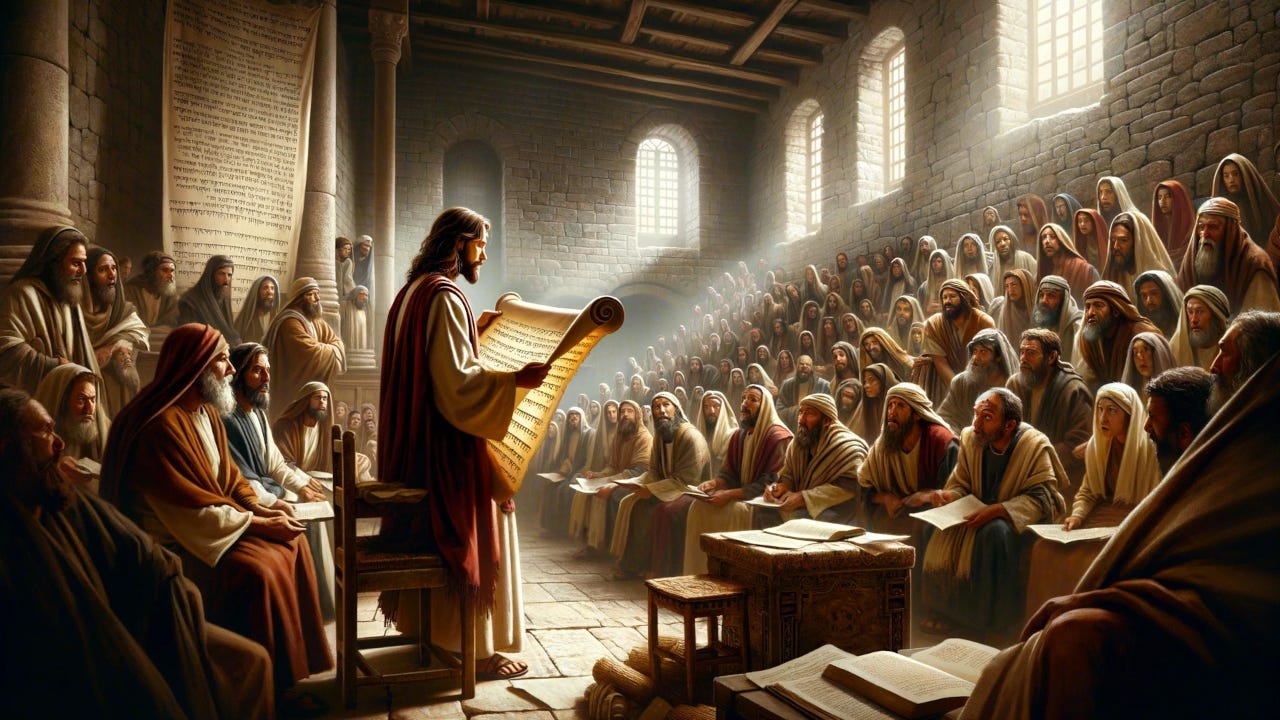
All of Scripture is the Sacred Word of God.
This is a core faith proposition for me. This I believe. There are no arguments to be offered either for or against. The proposition is axiomatic: one either believes it or one does not.
This is a faith proposition held by most if not all Christian communities. The Roman Catholic Church explicitly teaches this in their catechism. Martin Luther put it in the front of his Small Catechism. The Westminster Confession of Faith presents it as essential doctrine.
Baptist and Presbyterian churches alike plainly state Scripture is God's Word.
Arguably, one cannot practice Christian faith and not believe Scripture is the Sacred Word of God.
How, then, should we respond when people deride Scripture, claiming it is full of contradictions and so cannot possibly be God's Word?
How should we apprehend the claims of many that the Apostle Paul’s letters in particular perverted and distorted Jesus’ message?
How should we react to the claim that early Christians did not have Scripture and had to rely on their own oral teachings?
As the closing verse in Judges reminds us, each of us must choose moral right and moral wrong for ourselves, for better or worse. Necessarily, each of us must choose how to respond when we are confronted with various attacks on God's Word.
Yet Scripture does offer us useful guidance on the matter.
Perhaps most importantly we have the admonition that all vengeance is for God to carry out, which God had Moses sing to the Israelites in Deuteronomy 32. Vengeance and all punishment for sin is in God's more than capable hands; we should not take personal offense at those who malign God's Word, for He is more than capable of defending Himself.
We also have the Apostle Paul’s remonstrance in 1 Corinthians 14, that “God is not a God of confusion but of peace.” We will find no contradiction in God's Word; God does not argue with Himself. Whatever contradiction we think we see in Scripture is an artifact of our own misapprehension. As all Scripture is God's Word, all Scripture must be true. A contradiction would mean one part of God’s Word is not true, which cannot happen.
Therefore we are compelled by faith to approach each verse and each passage within Scripture by reconciling it to the whole of Scripture. The Epistles in the New Testament must be reconciled to Jesus’ teachings in the Four Gospels. Jesus’ teachings in the Four Gospels must in turn be reconciled to the Law and the Prophets of the Old Testament.
In like fashion, we know through faith that the Apostle Paul’s writings do not pervert or distort Jesus’ teachings. When we reconcile the Epistles back to Jesus’ teachings in Four Gospels, when we reconcile Jesus’ teachings back to the Law and the Prophets of the Old Testament, we eliminate any chance of corruption or distortion. When all of God’s Word is apprehended holistically, such propositions against Paul become logical and theological impossibilities.
On the topic of Paul’s Letters we even have the benefit of 2 Peter 3:15-16, where the Apostle Peter defends Paul’s writings as Scripture. Scripture itself commends Paul’s words to us.
Therefore we are compelled by faith to approach Paul’s Letters in such fashion as renders them consistent with Jesus, and then with the Law and the Prophets of the Old Testament. Again, as all Scripture is the Word of God, any other reading of Paul would be inherently hypocritical and in error.
Yet how can we defend the canon of Scripture as sacred when the earliest Christian communities did not have Scripture for guidance?
To point out that the texts within Scripture had to first be written is itself a tautology. Of course someone had to write down the texts within Scripture.
However, we know from both the Septuagint and Masoretic text that there was a Hebrew canon of Scripture, which became the Old Testament. Jesus Himself referenced the Law and Prophets from within that Hebrew canon of Scripture. Even the earliest Christians had access to that much Scripture.
Moreover, the Epistles of the New Testament were written either by the same Apostles who were seeding churches throughout Asia Minor and the Eastern Mediterranean region or by their first generation of students. We know from Acts 6 the Apostles explicitly chose to focus on ministry and the Great Commission, delegating management of the early church in Jerusalem to others. The teachers of the earliest Christians were also the ones ultimately tasked by God to write down those teachings.
As an historical matter it is documented that a consensus on the canon of Christian Scripture emerged long before the Synods at Hippo and Carthage formalized it. The argument that the texts within Scripture were arbitrarily chosen by the early Church leaders is itself simply not true.
Yet the one predicate which holds all this together is the assertion that all which is within Scripture is inherently the infallible Word of God. Every argument I have advanced here stands or falls on the truth of that assertion.
Can we prove, by a mass of empirical evidence, that the texts within Scripture are truly “God-breathed”? No. Archeology and ancient historical texts have established the historicity of many of the signature events in both the Old Testament and the Gospels, but historicity itself is not a proof of sanctity.
Saying Scripture is the Sacred Word of God is necessarily a leap of faith. As the Apostle Paul reminds us in Hebrews 11:1, “faith is the assurance of things hoped for, the conviction of things not seen.” Faith is when we choose to believe without evidence. When we say Scripture is the Sacred Word of God, we are choosing to believe that without evidence.
With that leap of faith, Scripture opens up for us, making a holistic reading—the one reading in which the teachings of Scripture are coherent and rational—not only possible but inevitable.
What if we do not make that leap of faith?
Without that leap of faith, we are forced to rely on our own ego—our own perceptions, our own biases, our own prejudices—when apprehending Scripture.
Without that leap of faith we can have no holistic framework for studying Scripture. The historical reality of Scripture is that the texts within were written over a span of some 1,500 years. Without the unifying effect of sanctity, we have no foundation to rationally resolve perceived conflicts and contradictions we might apprehend within those texts.
My prayer this day is that everyone everywhere will be inspired to make that leap of faith, to embrace Scripture in its entirety as the Sacred Word of God. My prayer this day is that everyone everywhere will find by that leap of faith Scripture opening up to them as a constant font of wisdom and instruction. My prayer this day is that everyone everywhere will find by that leap of faith Scripture providing a neverending training in righteousness and holiness.
Saying Scripture is the Sacred Word of God is necessarily a leap of faith. Faith is when we choose to believe without evidence. When we say Scripture is the Sacred Word of God, we are choosing to believe that without evidence.
Without that leap of faith, we are forced to rely on our own ego—our own perceptions, our own biases, our own prejudices—when apprehending Scripture.
With that leap of faith, Scripture opens up for us, making a holistic reading—the one reading in which the teachings of Scripture are coherent and rational—not only possible but inevitable.
All of Scripture is the Sacred Word of God. One either believes that, or one does not.
“But without faith it is impossible to please Him, for He who comes to God must believe that He is, and that He is a rewarder of those who diligently seek Him.” - Hebrews 11:6
Bless you for using your powerful analytical mind to figure out the dilemmas, Peter. The Christian world needs minds and hearts like yours!
Your title pretty much says it all on this one, Peter!! Linking once again.