

Then Peter came up and said to him, “Lord, how often shall my brother sin against me, and I forgive him? As many as seven times?” Jesus said to him, “I do not say to you seven times, but seventy times seven.”
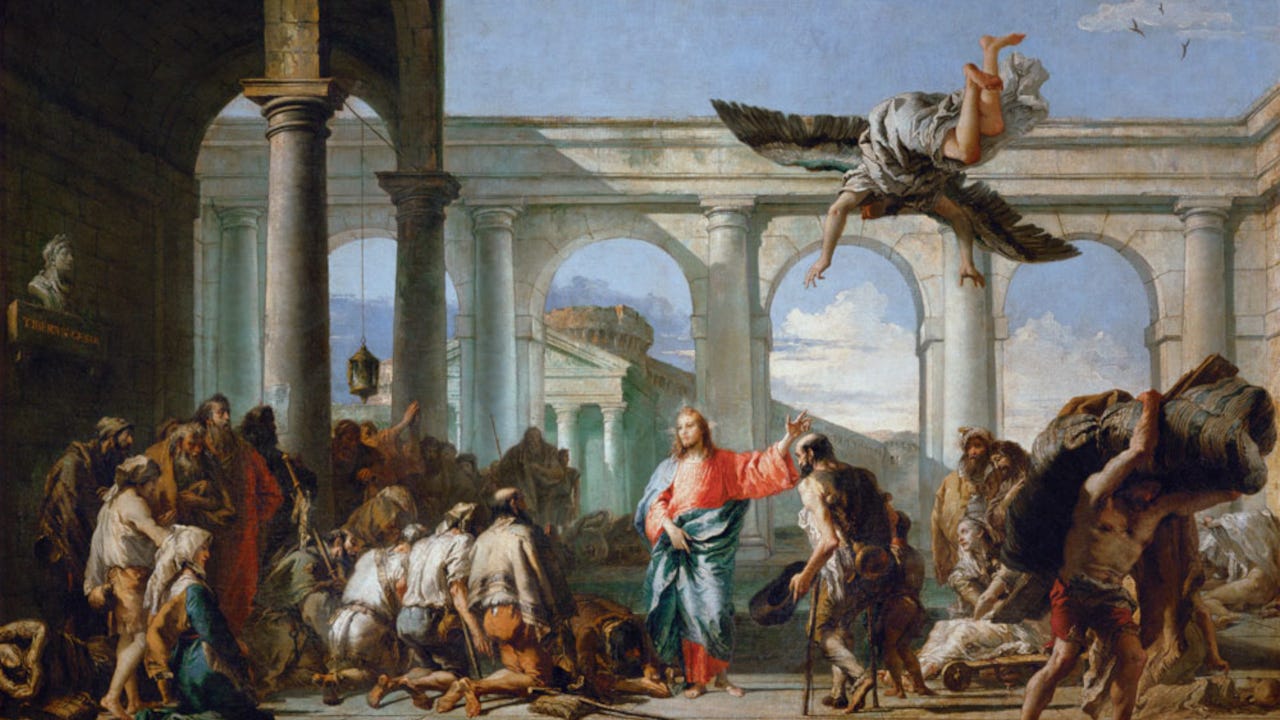
One teaching of Jesus which is reiterated throughout the Gospel accounts of His ministry here on Earth is that we are to forgive one another for our many mistakes.
We are going to screw up. We are going to hurt people. We are going to sin.
If you are living anywhere other than a deserted island, your own life experience is frank testimony to this. People have sinned against you, and you have sinned against other people. We have all sinned against God.
Yet no matter how many times we fall off the path, no matter how many times we sin, God's promise to us is clear: He forgives us for our sins.
We do not have to wonder if we are forgiven. We are told repeatedly by the prophets of the Old Testament that God offers us forgiveness. In the closing chapter of Amos, God promises to forgive the people of Israel and restore their cities. In the opening chapter of Isaiah God calls us to reason, promising that forgiveness is there if we will simply accept it, accept that we have sinned, and resolve to stop sinning. Psalm 32 is a celebration of the healing wonder of God's forgiveness.
God will deliver just consequence for every sin, but at the end is always His forgiveness.
We are told repeatedly by Jesus throughout the Gospels that we are forgiven. When Jesus heals the paralytic in Mark 2 He does so simply by saying “your sins are forgiven.” One chapter later, in Mark 3:28, Jesus expressly pledges that all sins committed by men will be forgiven. Jesus calls out to God to forgive the Roman soldiers nailing Him to the cross as they crucify him in Luke 23.
Forgiveness is God's eternal promise to us.
We are also told in both the Old Testament and the Gospels that because we are offered forgiveness by God, we are called to offer forgiveness to each other as well. The commandment in Leviticus 19 is unmistakable: we should not hate one another, but rather we should reason out our differences in a spirit of love, mercy, and compassion. The Lord's Prayer from Matthew 6 is a constant reminder that we are called to forgive one another for all of the many hurts we do to each other.
Moreover, we are not told that forgiveness is earned. We are told that forgiveness is given. It is given to us by God. We are to give it to each other. Jesus followed up His admonition to Peter about forgiveness with the Parable of the Unforgiving Servant, where one who would not forgive the debt of another was held harshly to account for his own debts and transgressions, a clear teaching that we are all called to forgive one another.
As many times as we ourselves sin, as many times as we ourselves need to be forgiven by God, that many times at least must we forgive each other.
Yet we are not told to passively be hurt and preyed upon by others. As much as Jesus calls us to forgiveness, so, too, he calls us to stand fast in the presence of evil, to oppose oppression, and defend the defenseless within our midst.
Jesus was not passive when asked to judge the woman caught in adultery in John 8. With wisdom and grace, He used the law to show mercy to the accused, and to confront the hypocrisy of the accusers.
Jesus was not afraid to confront the hard-heartedness of the Pharisees when He healed a man's withered hand in Mark 3.
Jesus was not afraid to throw down to drive the money changers from the Temple in Matthew 21.
We are called to forgive one another our transgressions. We are not called to ignore them.
Yet is that not what forgiveness fundamentally is? Does not God promise in Jeremiah 31:34 that He will form a new covenant with Israel, that He will “forgive their iniquity and…remember their sin no more”? In Hosea 14 God's assurance of forgiveness is filled with promises of hope, of healing, and abundance, not warnings of limits and continued consequences.
If God forgets our transgressions, should we not do likewise?
But does God “forget” anything? How—or why—would God, who we are assured knew each of us even before we were born, forget anything about us?
We must remember that forgetting is not simply letting go of knowledge and ceasing to remember. A quick consultation with Merriam-Webster reminds us that forgetting is also an intentional choice to not notice. Forgetting is not turning a blind eye towards something, but deliberately looking past that something to focus elsewhere.
When God forgives, He chooses not to see our sins. He chooses to see instead perhaps our repentance, or maybe our piety.
When God forgives He chooses to look not at our past, but at our future. His focus is not on what we have done, but what we will do. In Jeremiah 29:11 He reminds the exiled Israelites that He still has plans for them, still intends that they have a future. The Apostle Paul reminds us in 1 Corinthians 2:7 that God already knows all that will happen in our lives.
Throughout Scripture, God looks ahead to Man’s future. He does not look back to Man’s past.
When we forgive one another surely we should do likewise. When we forgive, we should understand that we are choosing to look not into the past but into the future. When we forgive we choose to focus not on what people have done, but on what they will do.
The Apostle Paul reminds us that this is what we should do in Ephesians 4, when he calls upon the church in Ephesus to come together in unity, and “Let all bitterness and wrath and anger and clamor and slander be put away from you, with all malice, and be kind to one another, tenderhearted, forgiving one another, as God in Christ forgave you.”
Paul calls on not just the church in Ephesus but all of us to choose to let go of anger and hatred, and look to those around us with mercy and compassion.
Paul reminds us of this again in Colossians 3, pointing out that as we are called to new life in Jesus Christ, so, too, are we called to practice forbearance and forgiveness where before we might have practiced vengeance and anger.
No matter how we have been hurt by others, no matter how people have sinned against us, we are called by God to make the conscious choice to look past what has been done, to look ahead to what may be done.
What of the one who, having sinned in the past, does not seek reconciliation, and shows no remorse or repentance? What of the one who, having sinned in the past, chooses to continue to sin against you in the future?
How can we forgive a man who will not repent, will not change, and will keep hurting us? We can’t. That man’s choices place him beyond forgiveness.
If a man rejects God’s forgiveness, he remains unforgiven. The Apostle John makes this clear in 1 John 1:9, that we must confess our sins and acknowledge what we have done, if we are to be forgiven by God. If we deny that we have sinned, if we deny that we need to be forgiven, then we are not forgiven.
Likewise if a man rejects your forgiveness, then he does not have your forgiveness. If you offer and he does not accept, he remains unforgiven by you—by his choice and not by yours.
It is not on any of us what others do when we choose to forgive them. The choice to accept or to reject is a choice others get to make, regardless of how we have chosen. The person who chooses to reject our forgiveness is a person who chooses a path which leads them away from us, just as if we reject God’s forgiveness we choose a path which leads us away from God.
Whether others choose to accept or reject our forgiveness, our calling is always to offer forgiveness freely—not just “seven times”, but “seventy times seven.”
My prayer this day is that I will always be mindful that we are all called to choose forgiveness. My prayer this day is that I will always have the courage and the character to choose to look past what has been done in the past, and choose to focus on what may be done in the future. My prayer this day is that I will always have the discipline to answer that calling to forgive, not just seven times but seventy times seven.
My prayer for you this day is that you also will always be mindful that we are all called to choose forgiveness. My prayer for you this day is that you also will always have the courage and the character to choose to look past what has been done in the past, and choose to focus on what may be done in the future. My prayer for you this day is that you also will always have the discipline to answer that calling to forgive, not just seven times but seventy times seven.
No matter how we have been hurt by others, no matter how people have sinned against us, we are called by God to make the conscious choice to look past what has been done, to look ahead to what may be done.
It is not on any of us what others do when we make that choice to forgive. The person who chooses to reject our forgiveness is a person who chooses a path which leads them away from us, just as if we reject God’s forgiveness we choose a path which leads us away from God.
Whether others choose to accept or reject our forgiveness, our calling is always to offer forgiveness freely—not just seven times, but seventy times seven.
How amazing would it be if all 400,000 churches in America had this preached on the same weekend? This what it could spark if even 1% of all who attended changed their lives by receiving this beautiful message. Thank you!!
Another beautifully written sermon, Peter. You never disappoint.
Yes, one of the main tasks of becoming a mature person is to learn how to love the sinner, but not the sin.
Peter, I am interested in your interpretation of a thorny theological point. We can find many passages that promise forgiveness from God if we repent. But what of the man who deliberately commits terrible evils all of his life, without repenting, and thinks he can just ask God for forgiveness on his deathbed? His intention is to get away with something, and there is no love in his heart. Some say he will be forgiven if there is even a crumb of true repentance as he lays dying. Others say God will not be fooled; you cannot use this as a life plan and expect to be forgiven. What do you think?