

Then what becomes of our boasting? It is excluded. On what principle? On the principle of works? No, but on the principle of faith. For we hold that a man is justified by faith apart from works of law. Or is God the God of Jews only? Is he not the God of Gentiles also? Yes, of Gentiles also, since God is one; and he will justify the circumcised on the ground of their faith and the uncircumcised through their faith. Do we then overthrow the law by this faith? By no means! On the contrary, we uphold the law.
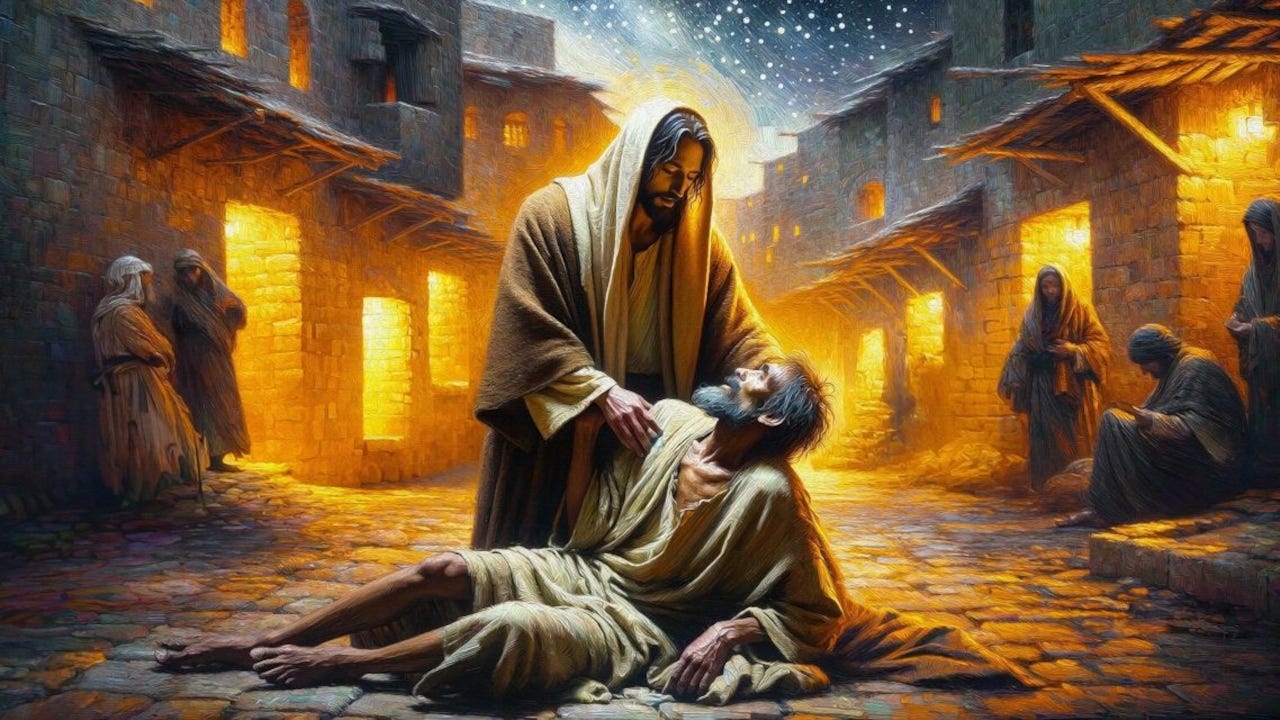
Scripture is clear that we are saved by faith in God.
We are saved by our faith. We are redeemed by our faith. We are justified by our faith.
Scripture is equally clear that we are never justified by our actions and deeds. We cannot work our way to redemption. We cannot earn our salvation.
If what we do does not influence our salvation, what becomes of God's Law? How does God's Law still matter if the primary focus of all law—what we choose and what we do—plays no role in our ultimate outcome?
Does God's Law still exist? Yes, it does.
Has God's Law changed? No, it has not.
We know God’s Law has not changed because Jesus Himself assured us that “not one jot” would fall away from the Law “until all is accomplished.” As God’s Law was then, God’s Law is now.
What has changed? Hopefully, we have—and we are called to always change. As Jesus teaches us in John 3, we are called to be born again, born of water and of the Spirit. We are called to be born into a new life of continuous change, growth, and transformation.
Change and growth have always been part and parcel of God’s forgiveness. In Jeremiah 31, when God promises a new Covenant with the House of Israel, He pledges to put His Law within each Israelite, writing the Law upon their hearts.
In Ezekiel 11, God pledges to take the “stony heart” out of our flesh, giving us each a new heart, one not hardened by sin and wickedness.
That pledge is repeated in Ezekiel 36:26.
We do well also to note what follows the transformation God promises: those so transformed willingly follow God’s Law, walking in His statutes and keeping His ordinances. In Jeremiah and again in Ezekiel, this is the assured outcome of God’s promised transformation.
Thus transformed, thus born again, we choose to follow God’s Law. Thus transformed, thus born again, we choose to do the right thing, and we choose not to do the wrong thing.
How shall we know right from wrong? How shall we know what we should choose to do and what we should choose not to do? We know these things because we know God’s Law. If we should be unsure of what the right thing to do is, we need only inquire of His Law, and be guided by His Law.
Faith saves us, faith redeems us, faith justifies us, but faith does not vacate God’s Law. Faith does not remove from us the calling to follow God’s Law.
Faith changes how we approach God’s Law.
Without faith our obedience to His Law is perfunctory and joyless. Without faith there can be no celebration alongside our obedience.
With faith, our obedience to His Law necessarily becomes passionate and joyful. With faith, celebration arises from our obedience.
We need only reflect on ourselves for a moment to see that this must be so. How much enthusiasm do we have for any task given us which, left to our own choosing, we would not do? How much passion do we have for any task given us which, left to our own choosing, we absolutely would do?
When faith is awakened within us, when through faith we are genuinely born again, obedience to God’s Law is what we choose to do. Jesus Himself teaches this in John 14, pointing out that when we love God we choose to keep His Law.
We choose to do good deeds. We choose to bear good fruit. We choose to walk the path God has set before us.
When faith is awakened within us, when through faith we are genuinely born again, we do not need to be told to keep God’s Law. Rather, we need only be told of opportunities to uphold God’s Law. We do not need to be told to feed the hungry or minister to the sick, but only of the ways by which we can do these things, or perhaps the opportunities to do these things.
Still, we must be mindful that, even with faith, we are still imperfect. We are still going to make mistakes. We are still going to sin.
Our imperfection is why we must remember that being born again is a continuous and ongoing process. Even the Apostle Paul acknowledged that, long after Christ appeared to him on the road to Damascus, he continued to struggle with a “thorn in the flesh.” We may be certain that all people struggle with their own “thorns in the flesh,” no matter how much faith they may seem to have.
Yet, if we are mindful, we can see in our struggles, imperfections, and sins a teaching on the need for Grace, on the need for forgiveness. After acknowledging his own struggles with sin, Paul reminds us of this as well. Because all of us sin, none of us can doubt the need for God’s Grace, nor for redemption through Christ’s Crucifixion.
Even though we do not always walk in God’s statutes, or keep His ordinances, God always desires we be reconciled back to Him. We can see this in Isaiah 55:7, where God promises abundant pardons to those who repent and seek to return to Him. We see this also in Joel 2, where God calls everyone to repentance, reminding that He “abounds in steadfast love”. As God warned the people of Israel in Ezekiel 18, while He will judge everyone for what they have done, He does not desire to condemn anyone.
We are going to stumble. We are going to make mistakes. We are going to sin. That has always been and always will be the reality of our existence. We are not going to be perfect in keeping God’s Law.
We cannot unmake our mistakes. We cannot undo our misdeeds. We cannot take back our sins. All any of us can do is repent, acknowledge what we have done, and seek forgiveness—and we are assured that there will be forgiveness. Not only does Jesus teach us to be forgiving towards each other, reminding us in Luke 17 to forgive those who repent of having wronged us, God reminds us in Micah 7 that He “delights in steadfast love.” When we seek God’s forgiveness, we are promised that it will be there, waiting for us.
Yet forgiveness can only relieve us of the burden of our past mistakes. Once forgiven, we still have to continue to live our lives. Once forgiven, we still must walk the path God has put before us. Once forgiven, we still must daily choose right from wrong, choosing hopefully to do the right thing rather than the wrong thing.
That ongoing need to daily make new choices brings us inevitably back to God’s Law. Faith will bring us to forgiveness. Faith will bring us back to the path God has set before us. Because we must walk that path faith will also of necessity bring us back to God’s Law.
Faith in God is how we are shown the path we must walk. God’s Law is how we are guided along that path.
Faith in God is what keeps us on the path God has set before us. God’s Law is how we may discern when we should turn to the right or to the left.
If we are mindful, we may also see that we are not exempted from the call within God’s Law for sacrifices in atonement for our sins. Rather, Jesus has answered that call on our behalf, redeeming all of us with his perfect sacrifice on the Cross at Calvary.
A sacrificial debt is still incurred by our sins, but through Jesus’ Crucifixion, our sacrificial debt is forever stamped “Paid In Full.” The Apostle Peter teaches this in 1 Peter 2, reminding us that Jesus’ sacrifice frees us to be born again into a new life of righteousness and joyful following of God’s Law.
Through Christ’s redemption, we are brought back to God’s Law.
God’s Law has not changed. As His Law was in the beginning, His Law is now, and will remain so for all time.
God’s Law has not changed. Our calling to follow God’s Law has not changed. Faith does not remove from us the calling to follow God’s Law.
Faith changes how we approach God’s Law.
My prayer this day is that through faith I will always be moved to follow God’s Law, to walk in His statutes and to keep His ordinances. My prayer this day is that through faith I will joyfully and passionately follow God’s Law, letting obedience to His Law be both celebration and testament of faith. My prayer this day is that, as faith has brought me back to the path God wills me to walk, mindfulness of God’s Law will always guide me along that path, allowing me to discern when I should turn the right and to the left.
My prayer for you this day is that through faith you also will always be moved to follow God’s Law, to walk in His statutes and to keep His ordinances. My prayer for you this day is that through faith you also will joyfully and passionately follow God’s Law, letting obedience to His Law be both celebration and testament of faith. My prayer for you this day is that, as faith brings you back to the path God wills you to walk, mindfulness of God’s Law will always guide you along that path, allowing you to discern when you should turn the right and to the left.
When faith is awakened within us, when through faith we are genuinely born again, we do not need to be told to keep God’s Law.
When faith is awakened within us, when through faith we are genuinely born again, obedience to God’s Law is what we choose to do.
Faith saves us, faith redeems us, faith justifies us, but faith does not vacate God’s Law. Faith does not remove from us the calling to follow God’s Law.
Faith changes how we approach God’s Law.
“When faith is awakened within us, when through faith we are genuinely born again, obedience to God’s Law is what we choose to do.”
I love how your powerful mind can succinctly express truths, Peter. I hope you can find a way to get your excellent sermons to a larger audience, as our society would really benefit from this wisdom. God’s blessings upon you, always!