

Do not be deceived; God is not mocked, for whatever a man sows, that he will also reap. For he who sows to his own flesh will from the flesh reap corruption; but he who sows to the Spirit will from the Spirit reap eternal life.
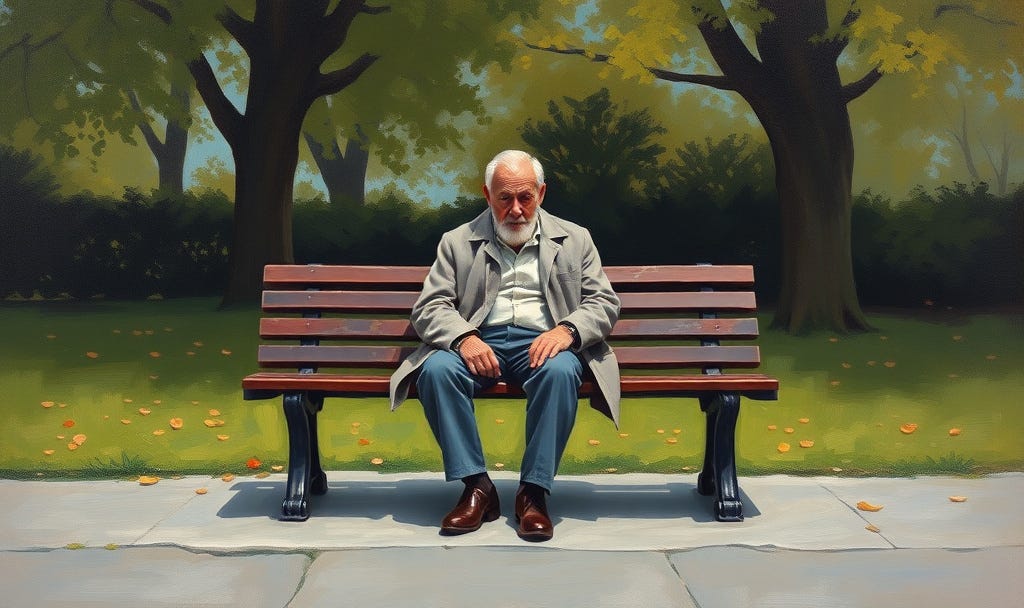
Choice begets action. Action begets reaction. Reaction begets consequence.
There is no part of the world where this sequence is not the eternal order of things. There is no part of the world where this is not God’s guiding principle for humanity.
I discuss choice quite often, and my reasoning for this is simple: choice is the starting point. Choice selects our actions. Choice frames the reactions which follow. Choice defines the consequences we receive.
Choices matter.
The closing verse to the Book of Judges reminds us that each of us has the power to choose for ourselves what is right and what is wrong. The grim story of corruption, vengeance and war which precedes that verse teaches us that we can all too easily make a complete mess of that choice, completely confusing ourselves as to what is right and what is wrong.
King David, for all his faults and sins, shows us that, even though we are imperfect and fallen, we can still choose well. He certainly chose well in facing Goliath. While he choose poorly in pursuing Bathsheba, he chose well in facing up to his mistakes.
Jonah chose poorly in rebelling against the task given him by God, but also chose to repent at least of his rebellion, if not his anger.
The Apostle Paul chose to persecute Christ’s early followers, until Jesus revealed to him on the road to Damascus that it was the Christians and not the Pharisees who were in truth keeping God’s Law. Paul chose to repent and become a leader in that same early church.
We are defined by our choices. Our fate is never an accident of birth, or the result of what others do. Our fate, in this life and in the life to come, is always molded by what we choose to do.
If we choose to uphold God’s Law and bend to God’s Will, our fate will be molded by that commitment to righteousness.
If we choose to defy God’s Law and oppose God’s Will, our fate will be molded by that rebellion.
If we choose one path, seeking happiness or perhaps material riches, we reject the other paths before us. If we go to the left we cannot take the path branching off to the right, and if we take the path on the right we cannot go to the left.
If we choose the path that takes us toward God, we are rejecting the paths which would take us away from God.
This is hardly remarkable or revolutionary doctrine. Jesus Himself made it clear that people had to choose whom they would follow in this world, God or Mammon.
Jesus also admonished His followers to be clear about their choices, and to define their choices with a simple “Yes” or “No”.
Choices matter.
Our choices matter, and our actions matter, because our consequences matter. Very few people, if any, are truly uncaring about the outcomes of what we do. We might not be concerned about all the outcomes of our actions, but invariably there are at least a few outcomes about which we are majorly concerned.
In almost every circumstance, we are not half as concerned about consequences as hindsight will tell us we should be.
When the tribes of Israel united in punitive war against their brethren the Benjamanites at the end of Judges, they did not intend the near-eradication of one of the tribes of Israel—but that was the outcome.
When David seduced Bathsheba, he did not intend to cause her husband Uriah to be killed—but that was the outcome.
When Jonah fled to Joppa and boarded a ship bound for Tarshish, fleeing the task God had set to him, he did not intend to be tossed into the sea and swallowed whole by a great fish or whale—but that was the outcome.
The Apostle Paul, when he persecuted the early Christians, did not intend to be confronted by Jesus on the road to Damascus, the enormity of his error thrust into his mind with traumatic suddenness—but that was the outcome.
It is these unintended outcomes, these consequences for which we do not plan, that drive many of our future choices. Because of unintended consequences, the Israelites had to agree to allow the surviving Benjaminites to abduct their daughters into forced marriages just to prevent the extinction of one of the Twelve Tribes. Because of unintended consequences, David, desperate after having impregnated Bathsheba, ordered her husband Uriah be left to die on the battlefield, just to conceal that adulterous liaison. Because of unintended consequences, Jonah, in spite of his anger and hatred towards Nineveh, complied with God’s instruction that he carry a warning to that city to end their wickedness or face God’s wrath. Because of unintended consequences, the Apostle Paul emerged from a three-day period of blindness determined to be the most passionate disciple of Jesus, determined to spread Jesus’ message of redemption and forgiveness to the entire Roman world.
But for the unintended consequences, the outcomes about which they did not care initially, the later choices by the Israelites, by David, by Jonah, and by Paul would not have been made.
What is certain is that there will always be consequences, both intended and unintended. Even seemingly “good” choices can produce unpleasant outcomes, and very often the morally right choices, the choices which conform to God’s Law, produce very unpleasant outcomes. Jesus was neither bluffing nor exaggerating when He invited His followers to “take up their cross”; He was reminding His followers that they would suffer horribly as a consequence of keeping to His path, but that also they would have a consequence of eternal life
Consequences matter. Outcomes matter. Actions matter.
Choices matter.
As the Apostle Paul reminds the Galatians, our choices are what determine actions, outcomes, and consequences. If we choose to indulge impulses and desires of the flesh, we are choosing a path that disregards God’s Law and invariably leads us away from God. If we choose to adhere to God’s Law, we are choosing a path that will lead us back to God.
The path of earthly desire has many pleasures.
The path of God’s Law has many challenges and obstacles.
We have to choose which path we will take, knowing we can only choose the one or the other.
We have to choose each day which path we will take, for the path we took yesterday need not be the path we take today, nor are we committed to that path tomorrow. If we took the wrong path yesterday, we can take the right path today.
Each day brings its own set of choices. Each day demands we choose which path we will take.
My prayer this day is that I will today be guided to make good choices, and not bad ones. My prayer this day is that I will today be inspired to choose to follow God’s Law, and to accept all the consequences that come, both pleasant and unpleasant. My prayer this day is that I will be mindful of the outcomes that arise from my choices, that I will weigh all of them prudently and deliberately, that I may choose them with intention and not by accident.
My prayer for you this day is that you also will today be guided to make good choices, and not bad ones. My prayer for you this day is that you also will today be inspired to choose to follow God’s Law, and to accept all the consequences that come, both pleasant and unpleasant. My prayer for you this day is that you also will be mindful of the outcomes that arise from your choices, that you will weigh all of them prudently and deliberately, that you may choose them with intention and not by accident.
Choice begets action. Action begets reaction. Reaction begets consequence.
This is the order of things.
Each day brings its own set of choices. Each day demands we choose which path we will take.
Choose carefully. Choose wisely.
Choices matter.
Not only is your wisdom a joy, Peter, but so is the eloquence of your expression. I treasure you! Bless you today and always.